Our workshop sits on the first floor of a building on Caxton Row, in the heart of Birmingham's Jewellery Quarter, where Arthur Elsworth opened the doors in 1964. Three generations on, eleven goldsmiths still work at the same long benches under the same tall windows, and his granddaughter Eleanor now leads the house. The room has changed little in sixty years, and that is deliberate, because the light, the tools and the rhythm of the day all suit the work.
At the bench
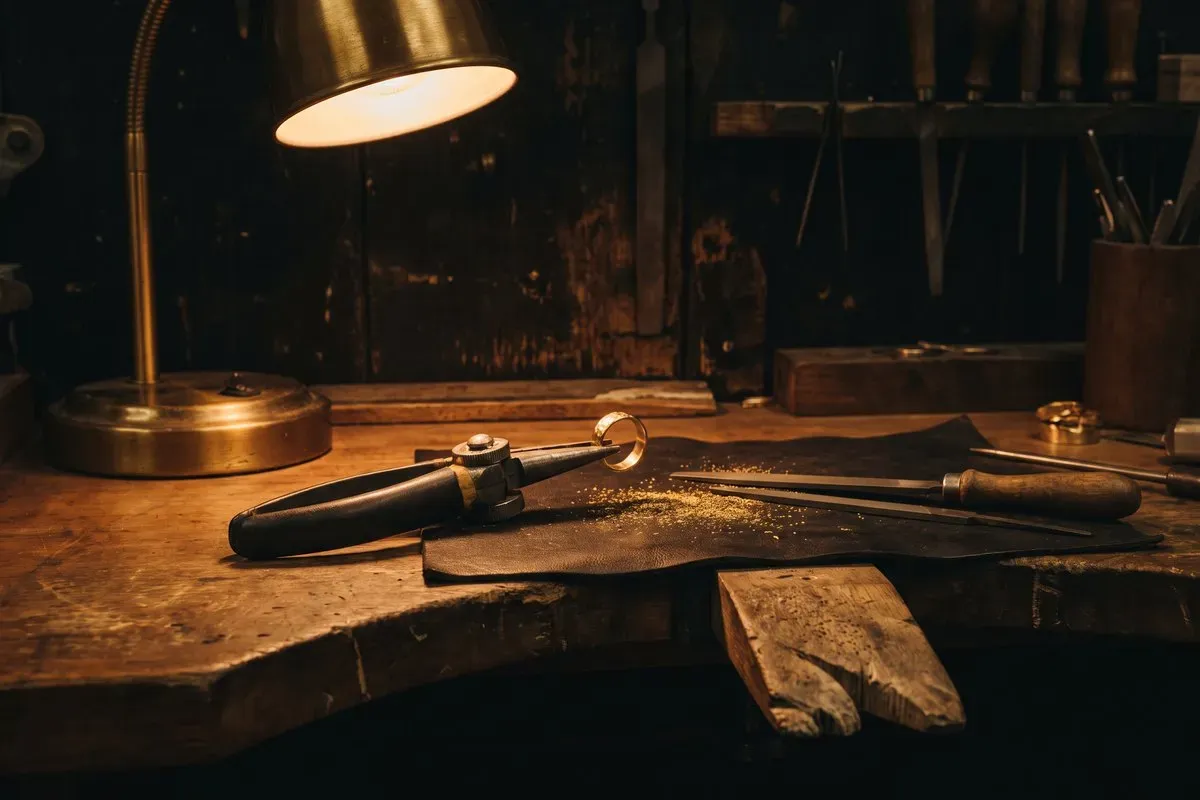
Every bench is set up the same way. At its edge sits a bench pin, a small wooden wedge that holds the work steady while it is sawn and filed. Drawn tight beneath it is a leather skin, there to catch the gold filings that fall as a piece is shaped. Nothing here is wasted. The filings are swept up, collected and sent away to be refined, and they come back to us as recycled gold for the next piece of work.
A piece moves slowly through the hands. A ring is drawn on paper first, then cast in recycled gold, then filed and set, and finally polished until the metal holds its own light. An engraver cuts the sunburst and the lettering by hand with a graver, one fine line at a time. It is quiet, patient work, and it cannot be hurried, however close the deadline may be. Every piece that leaves the bench has passed through those same hands from start to finish, and nothing goes out until it is right.
The eleven goldsmiths work side by side, each at their own bench, and each a specialist in one part of the process: casting, setting, engraving or finishing. A single ring may pass between three or four of them before it is done, and it is checked at every stage. Learning to set a claw well takes years, and the bench is the only place to learn it. A band is checked for its line, a setting for the hold on the stone, and a polish for the finish in the hand.
Hallmarked a few streets away
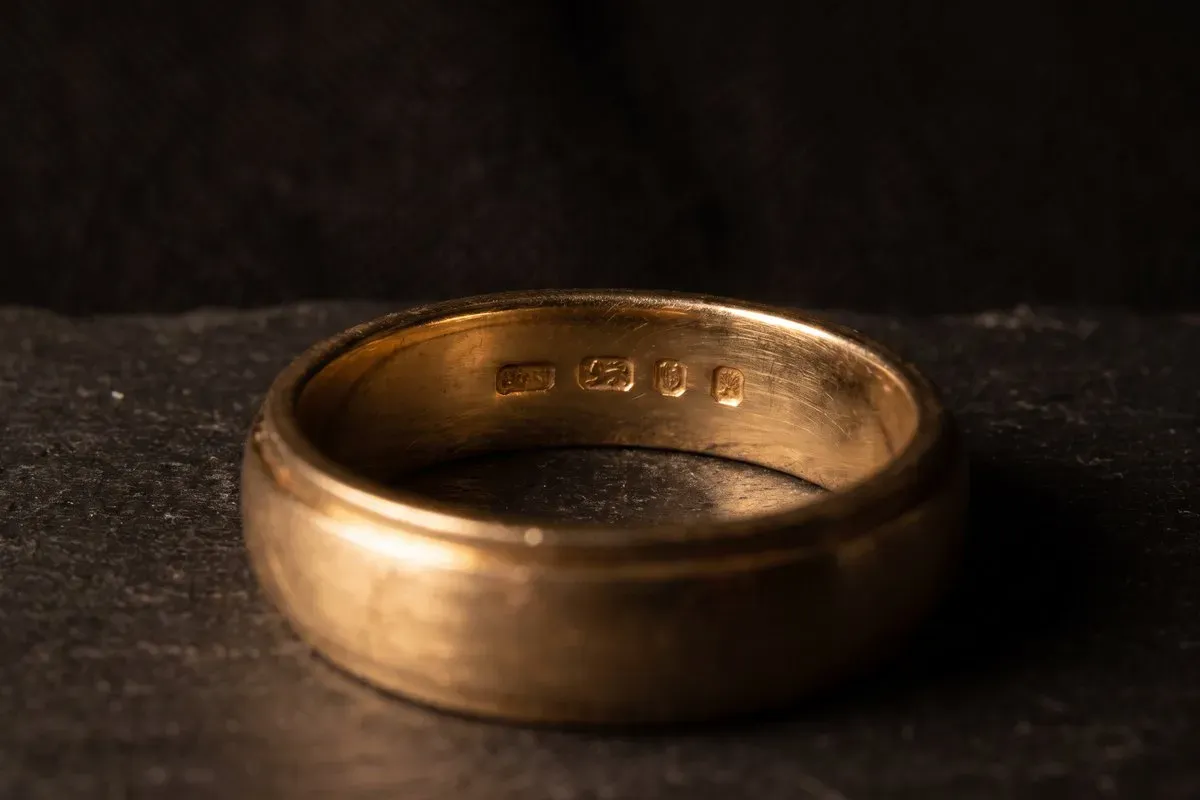
When a piece is finished it does not travel far to be tested. One of us walks it a few streets to the Birmingham Assay Office, where the metal is checked and the hallmark is struck. The maker's mark, the fineness and the anchor of Birmingham are all pressed into the metal, so the finished piece carries its own record of what it is and where it was made. It is a short walk, and one the house has made thousands of times.
Visit the benches
The benches are the heart of the house, and we like to show them. Workshop tours run on Saturdays by appointment, so you can watch a piece being made and meet the goldsmith who will look after yours. There is no rush and no script, and you are welcome to ask anything about the metals, the stones or the marks. Book through the workshop or the Mayfair salon, and we will put the kettle on before you arrive.